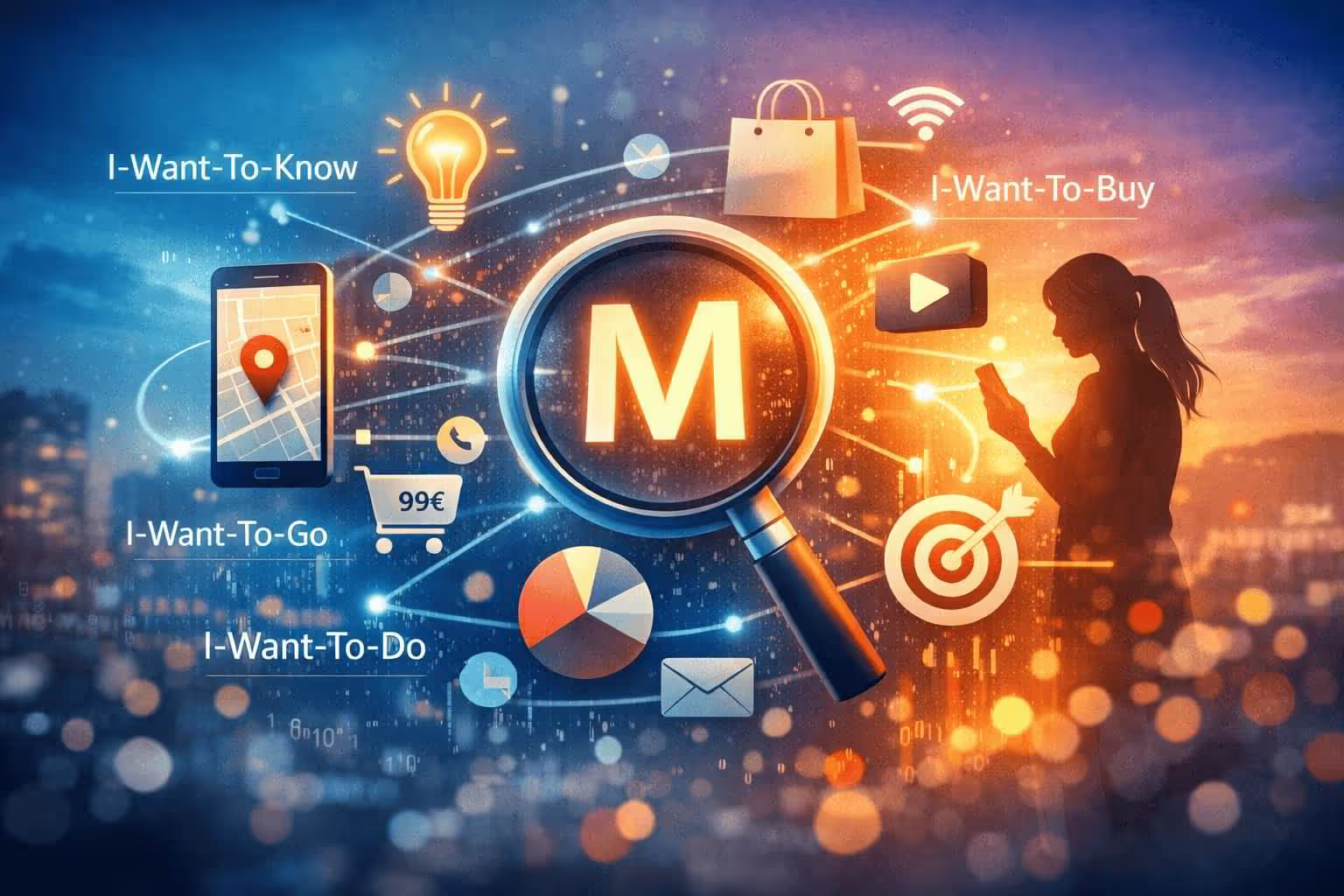
In a world that is increasingly characterized by crises, society and economy are facing ever increasing challenges. Whether due to pandemics such as COVID-19, the energy crisis resulting from the Ukraine war, or political tensions — consumer behavior and consumer needs often change rapidly and sustainably. These changes pose special challenges for digital marketing, but at the same time open up new opportunities.
Digital resilience instead of commercial break
While many companies are rashly cutting their marketing budgets and questioning best practices in uncertain times, digital communication is gaining in importance as a flexible and cost-effective tool for customer loyalty and brand visibility. As Mahdis Mivehchian, digital marketing expert at adlicious, aptly puts it:

Empathy, efficiency, and real-time communication
Crises can generally be divided into sudden events, which require rapid action, and creeping developments with a longer adjustment horizon. The former, such as the Covid-19 pandemic or the Ukraine war, require companies to react quickly, while the latter, such as the euro crisis, offer room for a gradual transition. As a result, every crisis changes existing routines, brings uncertainty and increases clients' need for orientation and trustworthiness. Research shows that companies that continue to invest in visibility and transparent communication despite adverse circumstances will emerge stronger from the situation in the long term.
Take advantage of opportunities where others stop
An exemplary example of the impact of crises on digital marketing is the 2022/23 energy crisis. Many companies cut their advertising budgets but shifted a share of them to cost-effective digital channels that can be addressed in a more targeted manner. In addition, the tense situation required an empathetic and safety-oriented approach to target groups in order to adequately take price awareness and changing consumer habits into account. Performance marketing became more important here, as proof of effectiveness and return on investment (ROI) was required more than ever before.
The COVID-19 pandemic in turn led to a surge in digitization, in which online presence, e-commerce and digital advertising formats played a central role. Traditional budget items such as print and events were reduced, digital channels became the main access point for many customers. The approach was made more empathetic and community-oriented, and data-driven marketing approaches with targeting and personalization became decisive. In addition, content marketing became more relevant as there was increased demand for helpful and relevant content.
Why brand courage creates trust
Despite frequent blanket cuts in marketing, the risks of drastic savings are high, especially in times of crisis. Companies that reduce their marketing prematurely often lose important visibility and weaken their brand perception. Opportunities, such as lower advertising competition and cheaper coverage, remain unused. It is also essential to design communication content flexibly and in line with the new reality so as not to fall short of the needs of customers. Lack of monitoring and delayed responses to social sentiments can cause additional damage.
The advantages of digital channels in times of crisis are obvious: They allow targeted and cost-effective communication, rapid adjustments of messages and measurable success tracking in real time. Less competition on digital platforms can also be used to build visibility and market shares. Continuous, empathetic communication also strengthens customer loyalty and trust, which pays off in the long term. A smart first step for companies in a crisis is to carry out a precise risk analysis and set up a cross-divisional crisis management team that reacts strategically and agilely to change.
Conclusion: Whoever remains visible remains relevant
Times of crisis make it clear that marketing is more than operational implementation — it is a strategic lever. Companies are well advised not to manage their communication reactively but with foresight. In this context, strategic marketing means setting clear priorities, reevaluating target groups and consistently aligning measures with the current needs of customers. Anyone who invests now is not investing in reach alone, but in trust.
At the same time, agility is crucial. Markets, sentiments and expectations often change within a short period of time during crises. Digital channels offer the advantage of quickly adapting messages, testing formats and making well-founded decisions based on data. Instead of long-term campaign plans, flexible setups, short decision-making processes and continuous monitoring of performance are needed.
In my opinion, companies should therefore use crises as an opportunity to question existing structures: Which measures really contribute to our goals? Where can we react faster, invest more efficiently and communicate more effectively? Anyone who thinks strategically and acts agilely at the same time not only remains visible but also able to act.
In the long term, brands that take a stand, offer orientation and consistently align their communication with added value and credibility will benefit. Marketing thus becomes a stabilizing factor — and short-term crisis management creates sustainable brand strength.
At adlicious, we help brands stand out even in uncertain times — with data-based, empathetic and flexible advertising solutions. Those who not only communicate but inspire turn crises into opportunities.
Sources:
More-fire (2022). Brand strategy in times of crisis.
German Entertainment and Media Outlook 2020-2024.
David Bock Agency (2025). Marketing in crisis.
Marketinginstitut.biz (2025). Marketing is not a pony farm: Why impact counts in times of crisis.